From Concept to Install: Our Commercial Kitchen Design Process

24 Apr, 2026

source
Share Post:


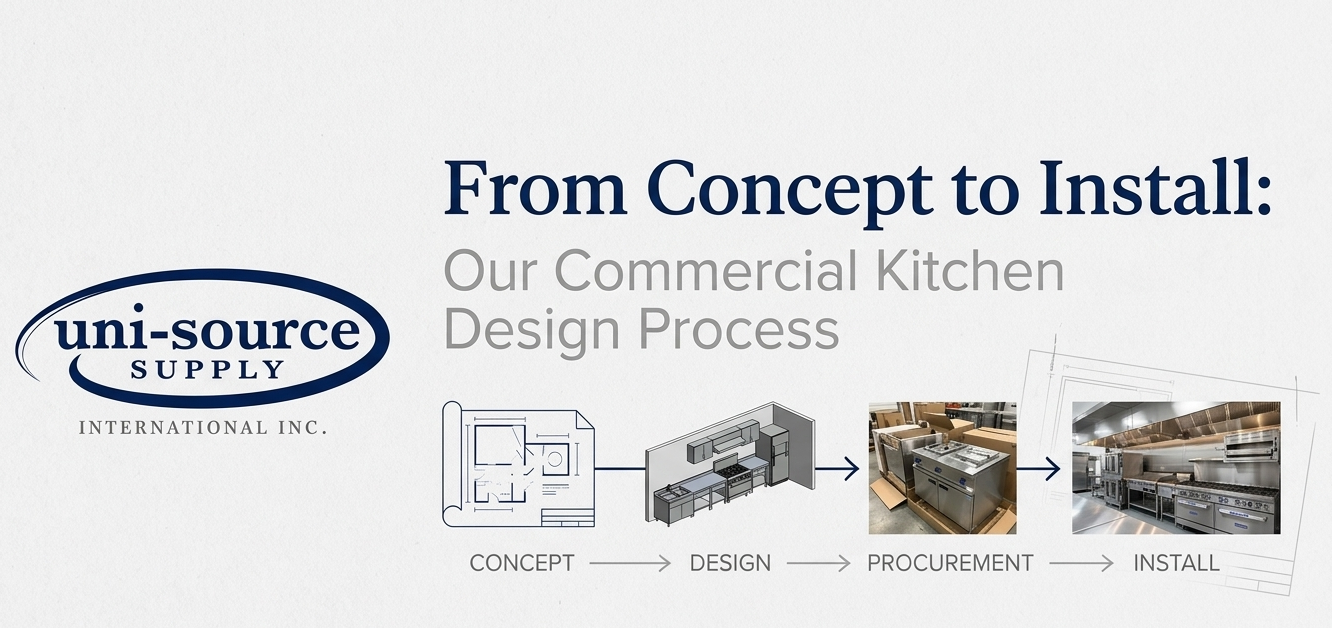
A successful commercial kitchen doesn’t happen by chance; it’s the result of careful planning, coordination, and experience. From initial concept to final installation, each phase plays a role in creating a kitchen that functions efficiently and supports long-term operations.
Here’s an overview of how a well-structured design process moves from idea to reality.
Concept Development
The process begins with understanding how the kitchen will be used. Menu type, volume, staffing, and service style all influence layout and equipment selection.
Early concepts focus on:
- Workflow efficiency
- Space utilization
- Compliance with health and safety requirements
Schematic Design & Layout
Once goals are defined, detailed layouts take shape. Equipment placement, clearances, and traffic flow are refined to support daily operations.
At this stage, selecting reliable equipment and fabrication partners is critical. Stainless steel solutions from manufacturers like Advance Tabco support durability and sanitation standards.
Equipment Coordination
Equipment selection must align with:
- Utilities (gas, electric, water, ventilation)
- Structural constraints
- Installation sequencing
Early coordination reduces redesigns and prevents conflicts during construction.
Fabrication, Delivery & Installation
Once plans are finalized, equipment moves into fabrication, delivery, and installation phases. Coordinating these steps ensures equipment arrives when the site is ready avoiding storage issues or schedule conflicts.
Bringing the Vision to Life
A thoughtful design process ensures the final kitchen performs as intended on day one. From concept to install, each step builds toward a space that supports efficiency, safety, and long-term success.
Partnering with experienced professionals throughout the process helps ensure no detail is overlooked.