Gas vs Electric Commercial Ranges: Which Is Better for Your Kitchen?

18 May, 2026

source
Share Post:


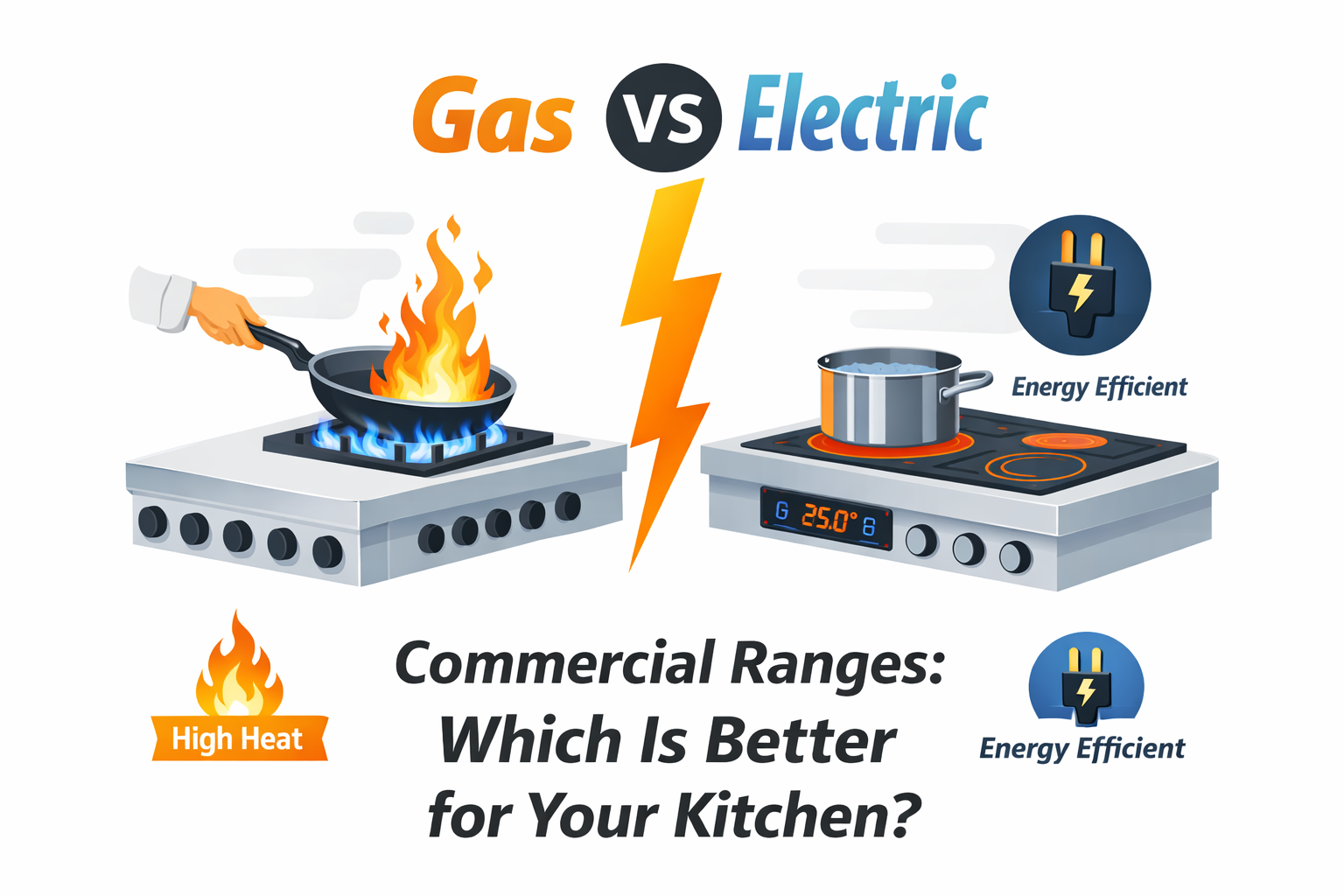
Choosing between gas and electric commercial ranges is a key decision that affects cooking performance, energy use, and kitchen design. Both options are widely used across foodservice environments, but the right choice depends on how your kitchen operates.
Here’s a breakdown of the key differences to help guide your decision.
Performance & Heat Control
Gas ranges are favored for their immediate heat response and visual flame control, allowing chefs to adjust temperatures quickly.
Electric ranges offer consistent, even heat and are often preferred in environments where precision and uniform cooking are priorities.
Installation Requirements
Gas ranges require:
- Proper gas connections
- Ventilation and hood coordination
Electric ranges may:
- Require higher electrical capacity
- Simplify installation where gas service is limited
Understanding utility availability early prevents costly design changes later.
Energy Efficiency & Operating Costs
Energy costs vary by region. Gas may be more economical in some areas, while electric ranges, especially modern, energy-efficient models can reduce long-term operating expenses.
Kitchen Environment & Menu Type
High-volume kitchens often prefer gas for responsiveness, while institutional or production kitchens may lean electric for consistency.
Manufacturers like Middleby and Unox offer both gas and electric solutions designed for different operational styles.
Maintenance & Longevity
Gas ranges require regular burner and ignition maintenance, while electric ranges may have fewer moving parts but higher component replacement costs.
Making the Right Choice
There is no universal answer, only what works best for your kitchen, menu, and infrastructure. Evaluating cooking style, utilities, and long-term costs helps ensure the range you select supports efficient operations.
Early coordination between design, utilities, and equipment selection allows teams to move forward with confidence and fewer surprises.